Oil and gas production
Know which separators, vessels and lines need attention, and why.
Production facilities and pipeline operators hold thickness readings, inspection findings and open actions in separate files. Reliatic puts them on one record per asset, works out remaining life and the next inspection date from the readings, and shows the working beside each number.
- Integrity and inspection engineers on production platforms, terminals and gas processing sites
- Pipeline and facilities integrity teams who keep the CML programme in Excel
- Reliability engineers who need failure history next to inspection history
The rule you work under, and what Reliatic holds for it
API 510 and API 570 practice
The rule: Remaining life from the corrosion rate, and an inspection interval capped at half the remaining life and a code maximum.
In Reliatic: Calculates both from your readings and shows the formula and the inputs. It is not certified to any standard.
Your operator's integrity management system
The rule: Findings get an owner, a due date and a recorded close-out, and decisions can be traced.
In Reliatic: Turns findings into actions with one owner each, and keeps a hash-chained history of who changed what and when.
Reliatic records and calculates. It does not make a plant compliant, and the inspection body, the competent person and the qualified inspector stay responsible for their decisions.
What you would use, on a real screen
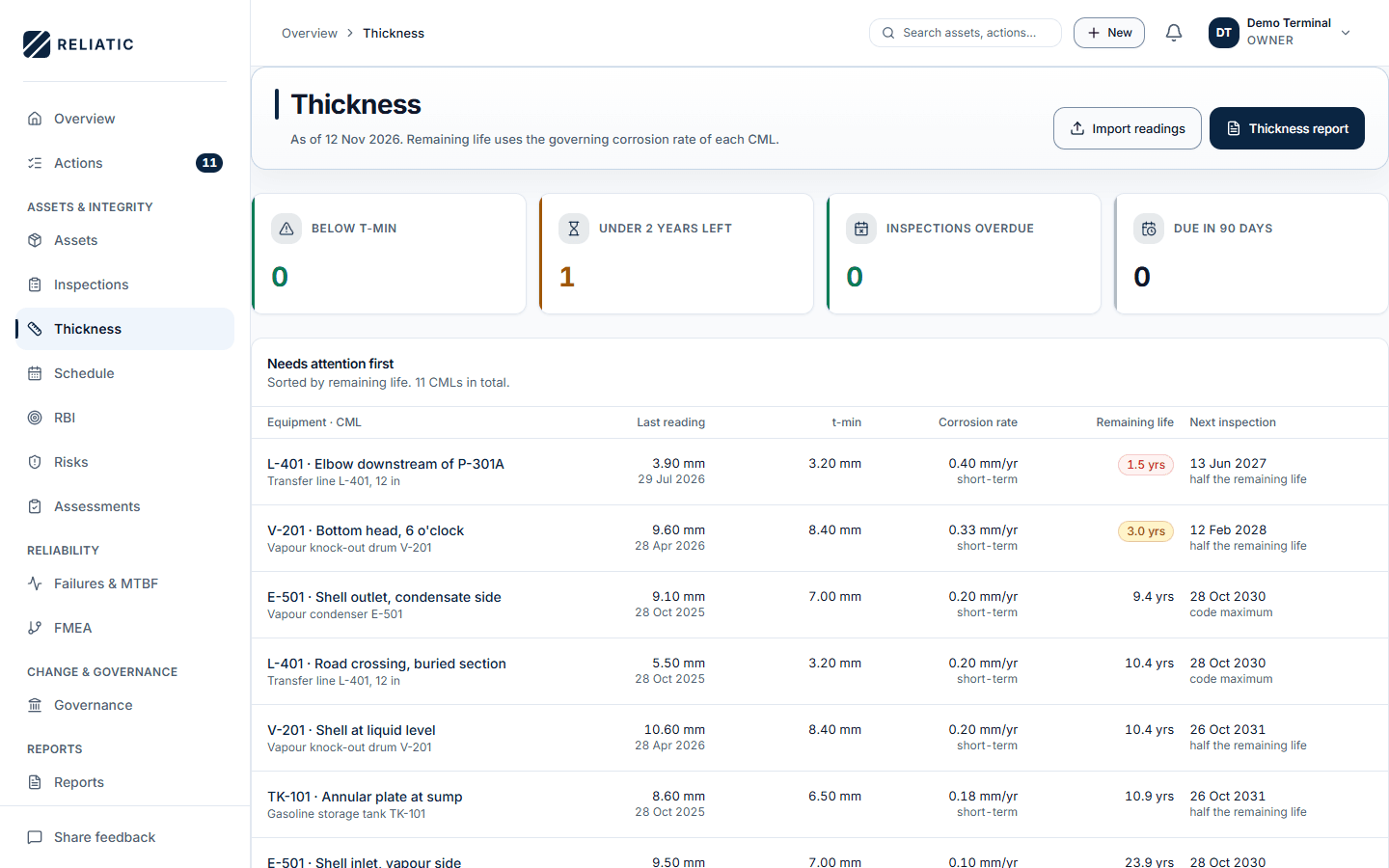
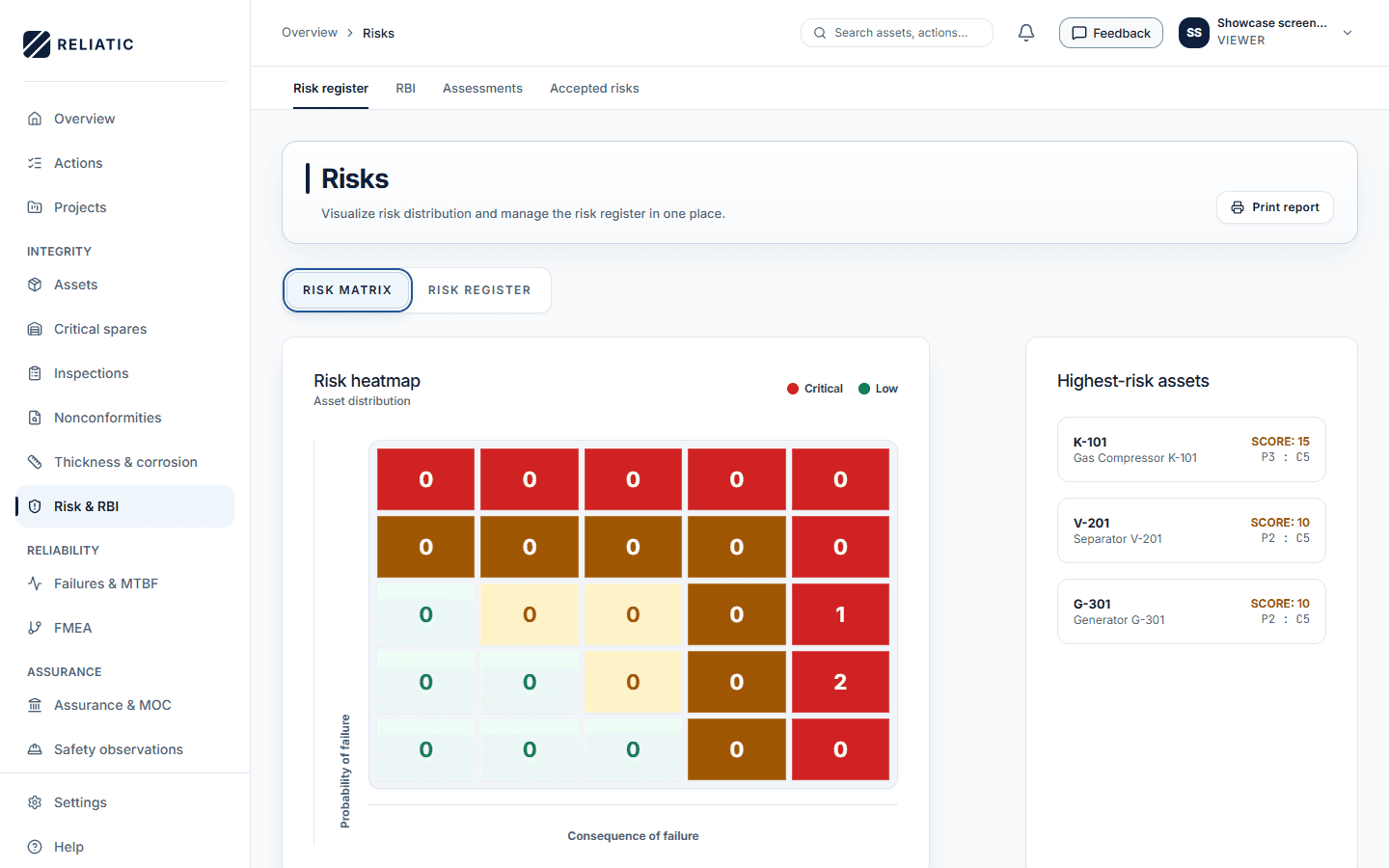
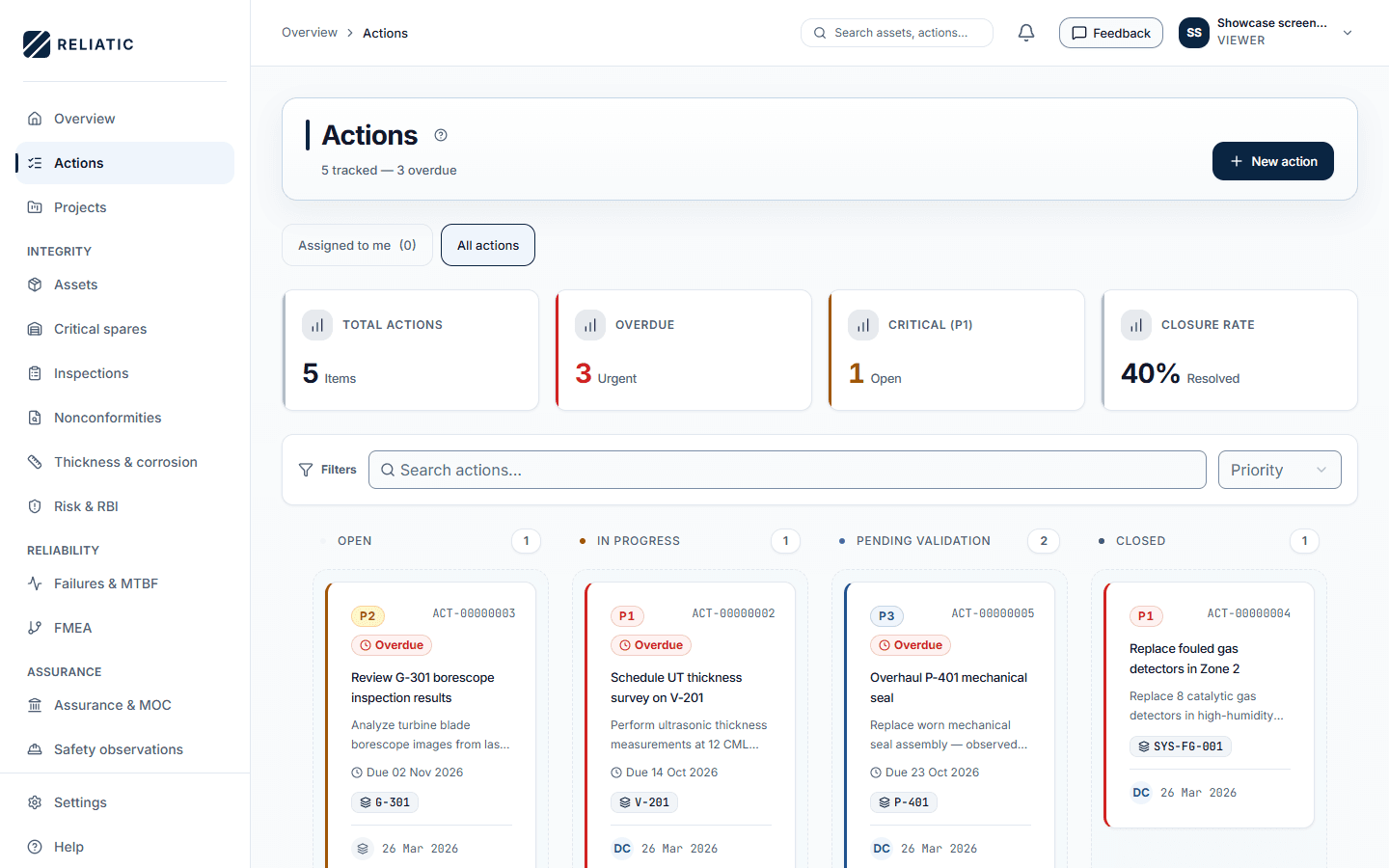
Demo data, from the Reliatic demo organization.
What it records and calculates
- Thickness readings per CML, the short- and long-term corrosion rates, and the remaining life above t-min
- A next inspection date: the lesser of half the remaining life and the code maximum (API 510 and API 570 practice)
- Import from the spreadsheet you have: bad rows are rejected with the row number and the reason
- Inspections with findings, photos and the NDE method, and actions from the findings
- A risk register on your 5 × 5 matrix. You enter the consequence
- A hash-chained audit trail: every change is kept, with who made it and when
What it does not do
- It does not import pipeline inspection-tool results or assess pipeline defects yet
- It has no workflow for approving changes to plant or process yet
- It does not run a quantitative risk-based inspection model
- It has no ready-made connector to a CMMS or ERP. It has a REST API and CSV and Excel import
Try it on your own data
14-day trial, no card. Priced per organization. Ask for a quote. Paid by invoice.